Episode Transcript
[00:00:00] Speaker A: Welcome to Thriving.
Thriving is created by the discipleship and advocacy team of the Synod of Victoria and Tasmania Uniting Church in Australia.
This podcast is produced on the unceded land of the Wurundjeri people.
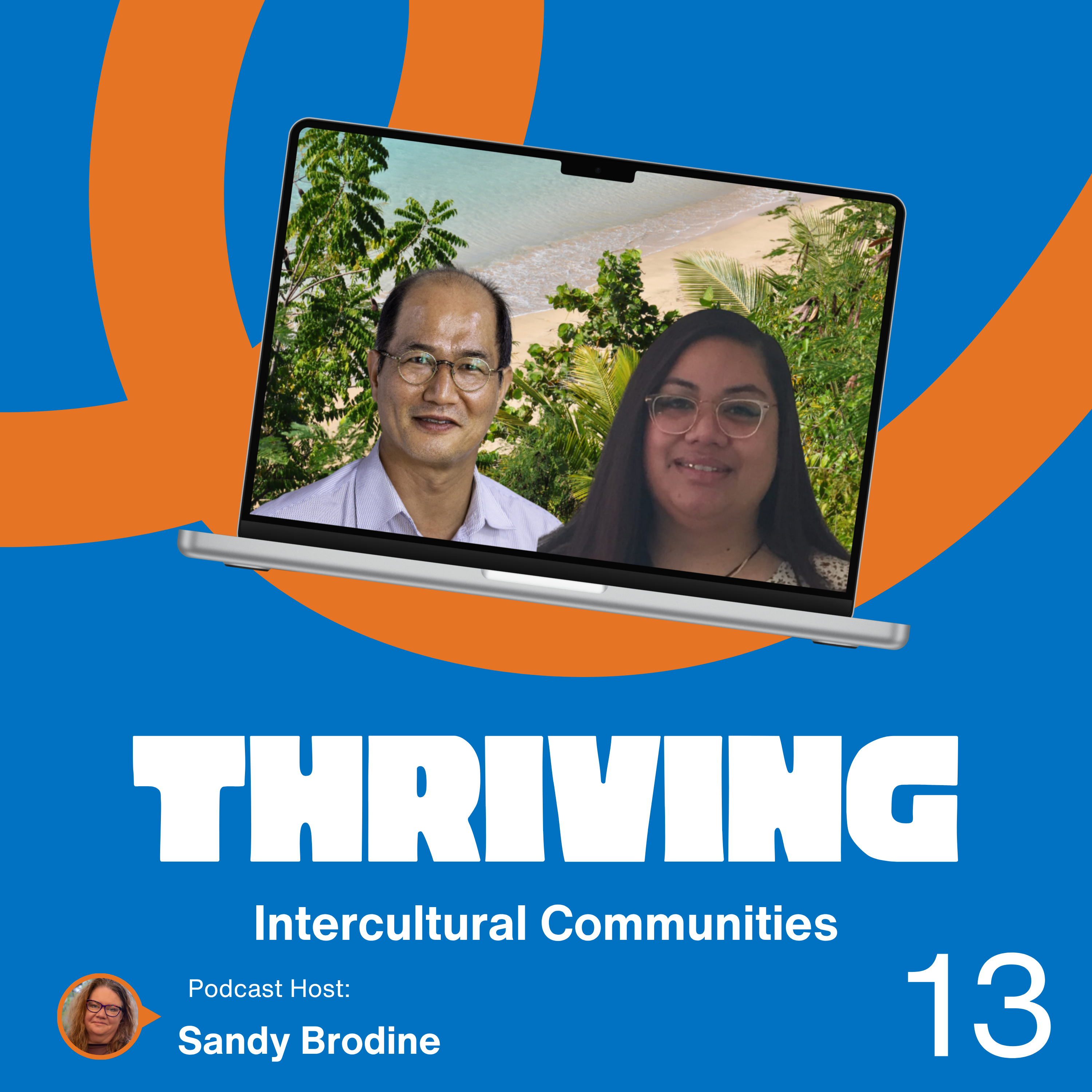
Hello everybody and welcome to Thriving. It's fantastic to have you with us today and I have two of my colleagues from the discipleship and advocacy team here. Here with us in the Thriving studio, we have David Dongwon Kim and we have Nia Lavarki and we're going to be talking about all things intercultural and thriving ministry. So there's lots of interesting conversation to be had today. Let's just first introduce David and Nia to the audience. David, hi. Tell us a little bit about you and where you've come from and what your job is.
[00:00:53] Speaker B: My, my cultural background is Korean, but I'm not good at singing and dancing.
I did ministry in different countries and so I did my ministry in South Korea, China, North America and Australia.
So when I came to Australia, I planted a church in Brisbane, Queensland and then I was called by local congregation, Uniting Church Congregation and. And then three years ago I was called by Victor Sinard and to do this role called Multicultural Ministries Coordinator.
And it's been great.
[00:01:30] Speaker A: Yeah, it's been good. So you and I were commissioned in the same service we started together.
[00:01:34] Speaker B: Exactly.
[00:01:35] Speaker A: And it'll be really good to hear what you think about growing thriving communities in a moment. Nia, Hi.
[00:01:41] Speaker C: Hello. Malalay. Yeah, so I'm Nia and I am the, the younger gens multicultural coordinator. I am a second generation Tongan that was born and then in New Zealand and migrated to Australia. I'm going into my fourth year of this role and yeah, really enjoying the journey and also the challenges in it.
[00:02:04] Speaker A: Yeah, it's a, it's a busy and challenging place to be. And Nia, you've got a big weekend coming up next weekend. Speaking of all things thriving, tell us what you're doing next weekend.
[00:02:16] Speaker C: Yeah, so next weekend we have about 70 of our young people, not just from Victor Synod, but we've got a few from New South Wales act as well from Queensland coming together for the Feast of Faith. So the Feast of Faith is a second gen called Leaders retreat, specifically made for our multicultural intercultural second gen leaders. It's a weekend where we come together to empower, enrich and encourage our leaders to be more confident, to be felt like they've been heard, but most of all to fill each other's cup as leaders within the church. Sometimes it's a bit hard being second gen leaders in our separate congregations, because sometimes we don't have the confidence to speak up and to lead from the front. So, yeah, it's going to be a great weekend. I'm sure there's going to be a lot of laughter, a lot of singing, but also a lot of Talanoa with one another. So looking forward to it next weekend at Merrick.
[00:03:12] Speaker A: So tell us, what does that word talanoa mean?
[00:03:14] Speaker C: Yeah, so talanoa in a Pasifika context is when you sit around and have a conversation. It's where there is no hierarchy, no one's higher than anybody, no one is more important than the other. But it's a space where we can just sit down and talk, have a conversation with each other. Taalanoa can be used in a time of disagreements or misunderstandings where you need to solve a problem. In the Tongan word, we say proverb.
So it's when you roll up the mat and you sit around and you talk and you share with one another. Dalano is a big part, especially with our second and first gen, because, as you know, sometimes it is hard to speak with our elders. Sometimes it is hard to feel confident or open enough to be in a space where you can have a conversation with our elders. So talanoa is a big part of my ministry because I always believe that having a simple conversation solves a lot of problems and takes you a long way.
[00:04:21] Speaker A: So I use the word mutual a lot. Mutuality and talk about, when I'm talking about intergenerational talk about developing relationships where people can learn from one another and can listen to one another. It sounds like that's a really important part of telanoa.
[00:04:36] Speaker C: Yeah, absolutely. Being able to have a two way street relationship instead of just a one way street helps in building relationships and networking connections with one another. So Talanoa is a beautiful place to start. So simple, so easy, but yet sometimes so hard.
[00:04:55] Speaker A: David, tell me a little bit about what you see around the synod in terms of thriving ministry.
[00:05:02] Speaker B: One word that comes to me is collaboration. I believe all the colleagues in the synod, especially discipleship and advocacy team, it's a very collegial relationship. Nia mentioned about Dalano. We do have a great Dalano amongst us, but it's more about listening and paying attention to others and be responsive to what we just heard from other members.
So, yeah, so I'd like to say that the collaboration amongst us, I think that's really important. And who is actually people who are actually involved in the ministry, they're working together. I Believe that that's really important.
[00:05:45] Speaker A: Absolutely, absolutely, yes. And I think for me the other thing is that is that flat structure where everybody's voice has an equal weight and can be included. And particularly if you're talking about any community that's trying to grow and we're trying to talk about young people and including people then being able to create a safe space where particularly young people feel that they're safe to talk is super important.
[00:06:11] Speaker B: I believe that's another word, a safe place. Creating a safe place for everyone.
[00:06:16] Speaker A: Yep. David, tell us a little bit about the community that you started in Brisbane.
[00:06:21] Speaker B: It was. How can I say that? It's, it's back in 2006 and I was approached by several young Koreans and they were 1.5 and 2nd gen Koreans in their 30s and 40s and they were saying that we heard that you did English ministry in America and then you now you settle in here and we've been looking for our church to go to and we don't want to go back to our parents church not because, just because of the language in the Korean language spoken in the service. But it's a culture and also misunderstanding and the wrong kind of ungrounded expectation for second gens. For example, well, you're Korean even though you were born in Australia and you must speak a Korean language. And that is kind of. And so because of that reason we left the church. But we never, never left Jesus Christ. So since we knew that you came here and we'd like to do something with you, would you be interested in planting a church for someone like us? And so I started a service, kind of the worship gathering with 12 people at my place.
[00:07:35] Speaker A: Oh wow.
[00:07:36] Speaker B: And then we went together from there.
[00:07:39] Speaker A: Does that still exist now? Is that still around that church?
[00:07:42] Speaker B: Well, it's a very kind of sad story because so within three months and we had about 30 people gathered in my place and two big. And so I reached out to Synod, Queensland Synod to find a worship venue for us and they found a place for us and then we started worshiping there. And then word of mouth I believe, and more people started coming. And so we ended up having about 40 families and all of them were at least in a permanent residence sense. Right. And so very strong in.
How can I say that? In worship and giving and everything was really. And back then I had a good support from the Queensland Synod. So they pledged that they would take care of my stipend for up to three years. And after two years this faith community became a congregation, self sustaining congregation. And so it was a good story to the wider church. So after serving nine years and I thought, okay, this is good church, I need to move on. But what happened was because their children started coming to church and parents were really interested in. And we've been encouraging you to find a church and you didn't go to church for many years and all of a sudden you started going to church. And I want to check it out. So their parents first j started coming to church.
Right. And then they took leadership.
Right. And then, you know, what happened, you know, afterward.
So after my resignation, formed the JNC and they called someone from South Korea and then, you know, what happened afterward. And then three years later, church was closed. They had a conclusion service.
[00:09:29] Speaker A: Oh, that's very sad, isn't it? Yeah.
[00:09:31] Speaker B: But you know, at the same time I planted English speaking second gen young, young people's young Asian people's service during the weekdays and Thursday evening. And that service is going well.
[00:09:43] Speaker A: Great, great. So we're right at the heart of this intersection between how do we have people of different ages working together in a way that's mutually respectful and how do we have intercultural interaction that's mutually respectful and that I think respects the fact that we're all created in God's image. Right. So we all have gifts to give that are, that are equal. How do we do that? Nia?
[00:10:10] Speaker C: It's really hard. I mean, especially from those that do come from, you know, cult or intercultural context is sometimes trying to be on the same page is very hard because as you said, it's very hard. Intergenerational, intercultural, multicultural. Very hard. Sometimes we don't even know what we're doing. With the second gen young people, they do have to wear a lot of hats because one like as David shared before, yeah, you may be Korean or you may be Tongan, but when we are around, you know, normal society, we have to be a certain way. But then when we're without people, we have to be another way.
And so sometimes trying to work intergenerational and intercultural is very hard because the young people are still trying to figure out who they are, who they are, where they fit in. So then there's a lot of layers that you have to do when we're trying to do working together. What's the right answer? I still don't know. I think that we're still discovering it as we journey. But again, for me, in my own experience, the best way to be able to move forward that I found is, is Atalanoa. I've had the privilege to run Easter camp at Canterbury Unani Church for the last couple of years. And we have ages ranging from newborns to 80 year olds. And we spend a weekend together doing Bible study skits. We even have a sports day. We share a meal together all day every day from literally Friday till Monday.
And you know, some of the things that I believe has helped this be a wonderful event is because the understanding, the mutual respect that our first, second and third have for each other.
Sometimes second gen young people believe that oh, we don't need the oldies, we're just waiting for the oldies to like slowly move on from this world and then we're just going to take over and then that's it. But what they are starting to realize through Bible studies or by through Dalanoz is that actually wait a minute, we still need our elders. We still need those who have come before us to give us some wisdom and encouragement. And you know, the elders don't realize, oh, you know, wait a second. These young people are helping run an Easter camp that has about 250 to 300 people. Maybe we should need to start like letting go and allowing them to be more free and have the space to move and to grow.
So I believe it's all about, yeah, just having a mutual understanding and respect for each other. That way we'll be able to, you know, join forces and be more intergenerational with each other.
[00:12:48] Speaker A: I know that's one of the success stories about the Tongan National Conference of the Uniting Church, isn't it Nia that they created space for the young people to actually have leadership roles.
[00:12:59] Speaker C: Yeah. So the Tongan National Conference back when Jason Gior was still the chairperson, he saw the need for a space for the young people because while the parents were having their meetings inside that would go for hours, the young people were outside at Merrickville in a car park. Not very safe. But due to that he decided to formally put together a second gen group. The second gen group consisted of young leaders throughout Australia. And the leader of the second gen team was actually our now president, Reverend Kristosouli. And then over the years 98, 95 of the conference, the young people or the second gen team would run from programs to logistics to admin to delegation to backstage, anything. But over the years as a person that's been on the second gen team as well, it actually gave us the confidence and gave us the freedom to run programs how we see fit for our young people. You know, we did a lot of, we had guest speakers that Spoke about their own ministry, their own family journey. We then moved from second gen team to. Then we had to add on for young families, so those who are newly married or starting a family. So we've been able to create spaces for everyone. But because of the trust that the leadership had for our second gen, we were then able to be confident and free and just like courageous enough to try different things. So yeah, I believe that relationship with us and the ministers or those in the executive team was what was able to open the door for the second gen to be able to just lead.
[00:14:41] Speaker A: David, does this sort of opportunity to grow thriving relationships exist in other national conferences or other intercultural groups in the Uniting Church?
[00:14:51] Speaker B: It's complicated and then very intersectional. And there are multiple layers of intercultural complex competence required. And by saying that, having said that, I mean, there are some people describing intercultural and multicultural ministry is more like creating a melting pot.
[00:15:06] Speaker A: So what's the difference between intercultural and multicultural? We haven't actually talked about that yet. What are these two things?
[00:15:12] Speaker B: Well, I believe in multiculturality is a definition for who we are. We are diverse. We live in this diverse environment with a different culture and language and ways of living and ways of talking and listening and ways of, you know, dressed up and then celebrating and ways of worshiping and praising as well, and praying as well. Right. And I believe interculturality is more like a verb that the motivation.
[00:15:42] Speaker A: Yep.
[00:15:43] Speaker B: Right.
[00:15:44] Speaker A: I keep using the word posture. Actually, it's a posture. It's a way of being, attitude, latitude.
[00:15:50] Speaker B: There's another good word, posture. And that's my definition of multiculturality and interculturality. So they travel together, they're always together. We can separate them. So when we talk about multicultural, we must include intercultural because there are big dynamics between two of these.
[00:16:11] Speaker A: And many of us are kind of intercultural in our bodies, aren't we? We've lived in other cultures and those cultures have changed, changed who we are as people. I mean, even for me, with my white face, I've lived in China and taught Chinese and it's a definitely important part of who I am and less obvious when you look at me. But it's there and important and it shapes the way I think and the way I interact with people.
And that's part of that intersectionality, isn't it? How do we engage with others?
[00:16:37] Speaker B: I believe so actions, you know, that's required. I mean, you're a multicultural person, but if you don't do anything at all, there is nothing and no one knows you are multicultural. But because of the interactions you are intentionally creating, people know that you are multicultural. That interaction is more like interculturality.
[00:16:58] Speaker A: Yeah.
So you said something about intercultural competence before. This is something I've heard you talk about quite a bit. Can you just explain what intercultural competence is, please?
[00:17:08] Speaker B: Intercultural competence is knowing who you are. That's the starting point. You must know who you are before you are putting yourself and engaged into other cultures. So without telling others where you from and who you are, and how come you get to know other cultures and get to know other people. So interculturality, competence, starting with your own identity, and then you share your identity with other people, and then it will encourage people to share their cultural identity. So that builds up intercultural competence.
[00:17:42] Speaker A: Is it something also about how you read other cultures, so how you behave when you enter a setting with people from other cultures so as to, you know, not be offensive or whatever? Is that part of intercultural competence?
[00:17:54] Speaker B: I believe so. It's not about, you know, a cultural assimilation process, but it's more like living together, co. Existing. Existing by. You mentioned about respect. And so with this attitude of reverence. Right. And then you don't. You don't try to become someone else, and you don't ask people to become someone like you.
[00:18:13] Speaker A: So it's that mutual word again, mutually coexisting. But at the same time, I might need to do things that are not offensive to people of other cultures. So I need to be aware of what some of those things are so that I can live in a way that allows us all to coexist in happy, positive relationships with one another. I'm not suggesting it's about assimilation at all. I'm suggesting it's mutual. Like we all need to learn ways to understand each other better.
[00:18:39] Speaker B: That's right.
Simple example that I have is when we go to Asian restaurants, Chinese or Indonesian, Korean restaurants, and they usually have a set of cutlery, right? And forks and knives and spoons and chopsticks. So whoever comes and they, they get to choose whatever that they're familiar with, right? So Koreans, I would go for, you know, pair of chopsticks, Right. And then my friends from somewhere else and they, oh, I need forks and knives. Right. But when I go to different restaurants, like in a Western restaurant, and they don't offer me a pair of chopsticks.
[00:19:13] Speaker C: Wow.
[00:19:13] Speaker B: So intercultural competence means, well, we welcome everyone. And that's what they. That's what people saying. Right.
[00:19:21] Speaker A: Might be tricky if the food doesn't work that way though, Right.
You know, if you're in a. In a Western steakhouse, you might be in a bit of trouble with a pair of chopsticks.
[00:19:31] Speaker B: Well, you know, Koreans use chopsticks, whatever.
[00:19:33] Speaker A: So everything, even for a great big
[00:19:36] Speaker B: space, even steak somehow, don't you using chopsticks parts in the midst.
[00:19:44] Speaker A: Chinese people don't. Oh, well, yeah, not quite like that. That's an interesting example. I think.
[00:19:49] Speaker B: So. You know, it's intellectual competence comes with how hospitable are you? And that's the question, how much are you mindful of others like it Also, it includes disability and also inclusion matters.
Right.
[00:20:04] Speaker A: Do you want to say a bit more about that?
[00:20:05] Speaker B: Well, I've been preparing a session for Lay Preachers association conference happening this weekend. And so they've been asking me to share about the multicultural understanding and also intercultural competence. And so I've been including in my session about disability and inclusion and also reaching out to hospitality towards LGBTIQ API community as well. And so because they are part of multicultural reality in our ministry, being hospitable to people, people from other culture and people trying to do, for instance, organizing worship service and they ask someone to read the Bible in different language. And then we often see that when we get to praying the Lord's Prayer and we say, let's pray the Lord's Prayer together in your own heart language. We know because we learned and we acquired to be mindful of people from other cultures. Right. But we don't get to practice, practice towards the people with disabilities, people with a different understanding of sexual orientations and things like that.
And also in the first nations people as well.
[00:21:16] Speaker A: Yeah. And it's a massive piece of ongoing work to try and make everything we do as inclusive as possible of all sorts of people, no matter who they are and where they come from, how their brains work. I've been talking a lot about neurodiversity in recent times, and that also takes a lot of work to make sure that people whose needs in terms of how they comprehend the world and make sense of the world are met. Because a lot of our services with a whole lot of words and preaching work really well for people who think in that way, but don't work well for people who don't make meaning in that way. And of course, those people exist right across the cultural spectrum, don't they? There's neurodiverse, Koreans are neurodiverse, Tongans are neurodiverse, everybody.
And working out how to include them so that they can feel part of a worshipping community and be Able, as Nia says, to actually act as leaders and be engaged in ways that are. That look different because their brains work differently, they think differently is really important.
[00:22:18] Speaker B: That's right. And also include different social status, like, for instance, refuge, refugee families, people from refugee families, and asylum seekers as well. So how can we be inclusive? And that's the rhythmic question. And how much and how far can we be inclusive?
[00:22:37] Speaker A: Yeah. And it's beyond the technical fixes of, oh, if you want to have disabled people welcome in your church, you need to lower the floor and you need to be able to have them actually into the building. It's about, you know, having them up the front doing the leading and not just being present in the building.
How do I hear their voice? How do I have them included in everything we do?
I think is part of it. Nia, I'm just wondering about the services that happen once a quarter with young people coming, that are led by different people from different communities. They're becoming more and more multicultural with a range of different cultural groups. Can you say something about how those groups have developed so that each culture feels like it's welcome and included?
[00:23:23] Speaker C: Yeah, absolutely. So it's actually changed now to once a month, the young people from different congregations host. So it can go from the Samoans in Craigieburn to out in Werribee to Sunshine to Canterbury to Plenty Valley, even out to Danny Nong or Chad Stone.
Like, it is actually really moving around here in our Melbourne area.
[00:23:47] Speaker A: So they really prepared to travel. It's that they really are.
[00:23:51] Speaker C: They're excited. And I'm like, hey, if that's what you want, like, go ahead. I'm not going to stop the spirit of the Lord moving around. So, yeah, they come together where each congregation will host once a month. They run it however they see fit, whether it be Bible games, whether it be praise and worship, whether it just be a time of games.
But however the leaders or the congregation youth group see how they want to run that program, they are allowed to. It's been going on for about, I think, maybe a year now. What was we started off as our synod intercultural youth rally that happens at the end of the year every year, is now a monthly gathering for these young people.
I think it also gives them a time to connect and also share how life's going, the struggles, the ups and downs. But most of all, it's like a community where they can just be together, just gather and hang out.
[00:24:48] Speaker A: So they're genuinely getting to know each other now. And they've basically taken the lead of the thing. Right. It's their thing, literally.
[00:24:55] Speaker C: So I don't run it. Sometimes I don't even turn up because they need to have the space and they need to be able to learn to do things on their own. As leaders, my job is just to oversee, provide any advice or guidance when needed. But having to teach them what it's like to be given a chance to step up, this is what it looks like. So then hopefully when the next generation comes along, they'll give the next group of leaders a chance to step up and have the space to lead in however they see fit. But obviously in a safe environment. And yeah, it's going great. I mean, they have so much energy. I went to one a couple months ago out in Werribee. You can have about 50 to 100 kids here. And you know, obviously the service happens and then supper happens and then the real after worship happens. So have to have a lot of energy to stay. I'm getting old. I can't do these late night hangouts anymore because, yeah, these kids have a lot of energy.
[00:25:57] Speaker A: Fantastic. Is there one last thing you'd like to say about thriving community as we just finish up now?
[00:26:03] Speaker C: No, I think for me, and in an intercultural, multicultural space, I would just encourage our churches to ahava Talanoa, sit down, have a conversation. When was the last time you spoke with someone that may not look like you or come from where you originate from? Having a Talanoa brings a lot of mutual understandings together, respect, but most of all a connection.
Because even though we come from different backgrounds and we come from different original homes, we have one objective in life and that is to love and serve our Lord in all things that we do.
[00:26:39] Speaker A: Amen.
And David, is there one last thing you'd like to share with us?
[00:26:44] Speaker B: Yeah. It's thriving communities. We're talking about gathering of people, but not just the people, but it's a faithful community who's looking for the relationship with God and with each other. And so thriving community. I believe that one of the key aspects is we are not entertaining, keeping people entertained, but we provide, we create a space for God welcoming people.
[00:27:10] Speaker C: Lovely.
[00:27:10] Speaker B: So we creating a space for people experiencing the presence of God. I believe the only reason people come to church, our gathering place is because it's church where God dwells.
Otherwise they've gone to other places and then spending more money and then it's like great places, right, to hang out. But people have chosen to come to church because they value their relationship with God.
[00:27:39] Speaker A: Thank you, Nia. And Dong Won for joining me this morning. It's been wonderful to have an opportunity to to talk to you both about thriving communities of faith. And I hope that our listeners who've had an opportunity to wonder this morning about what it might be like to be part of a multicultural, intercultural, intergenerational community and how we might help those communities to thrive as they exist around the place. Thanks, Nia, and thanks David, and I'll catch up with you another time. See you later. Bye.
Thank you for listening to Thriving.
This podcast is hosted and produced by Sandy Brodine. If you have enjoyed Thriving, don't forget to like and subscribe. You might also like to share with your church community or friends and talk about how these ideas can help you grow your thriving community of faith. We'll see you next time.