Episode Transcript
[00:00:00] Speaker A: Welcome to Thriving.
Thriving is created by the discipleship and advocacy team of the Synod of Victoria and Tasmania Uniting Church in Australia.
This podcast is produced on the unceded land of the Wurundjeri people.
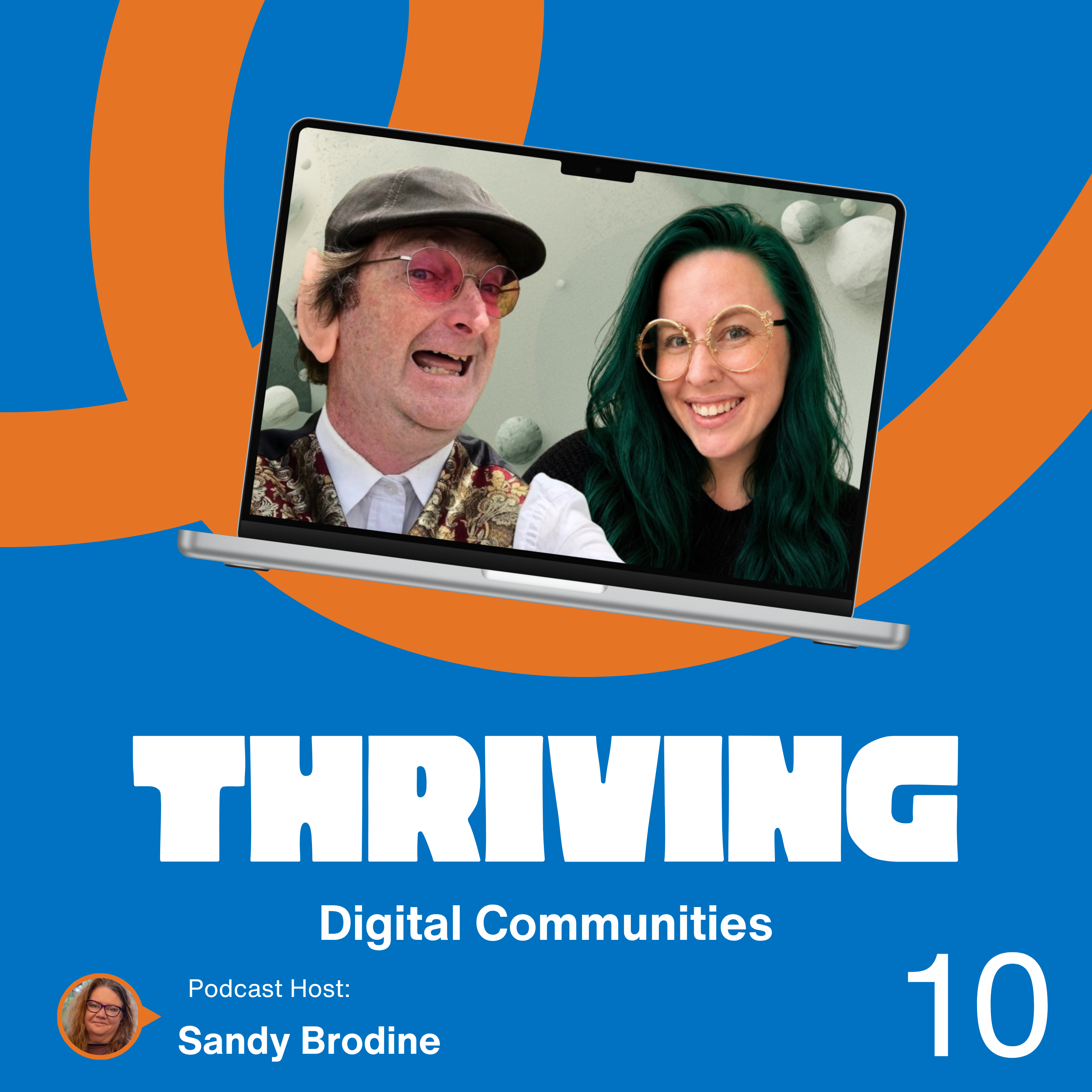
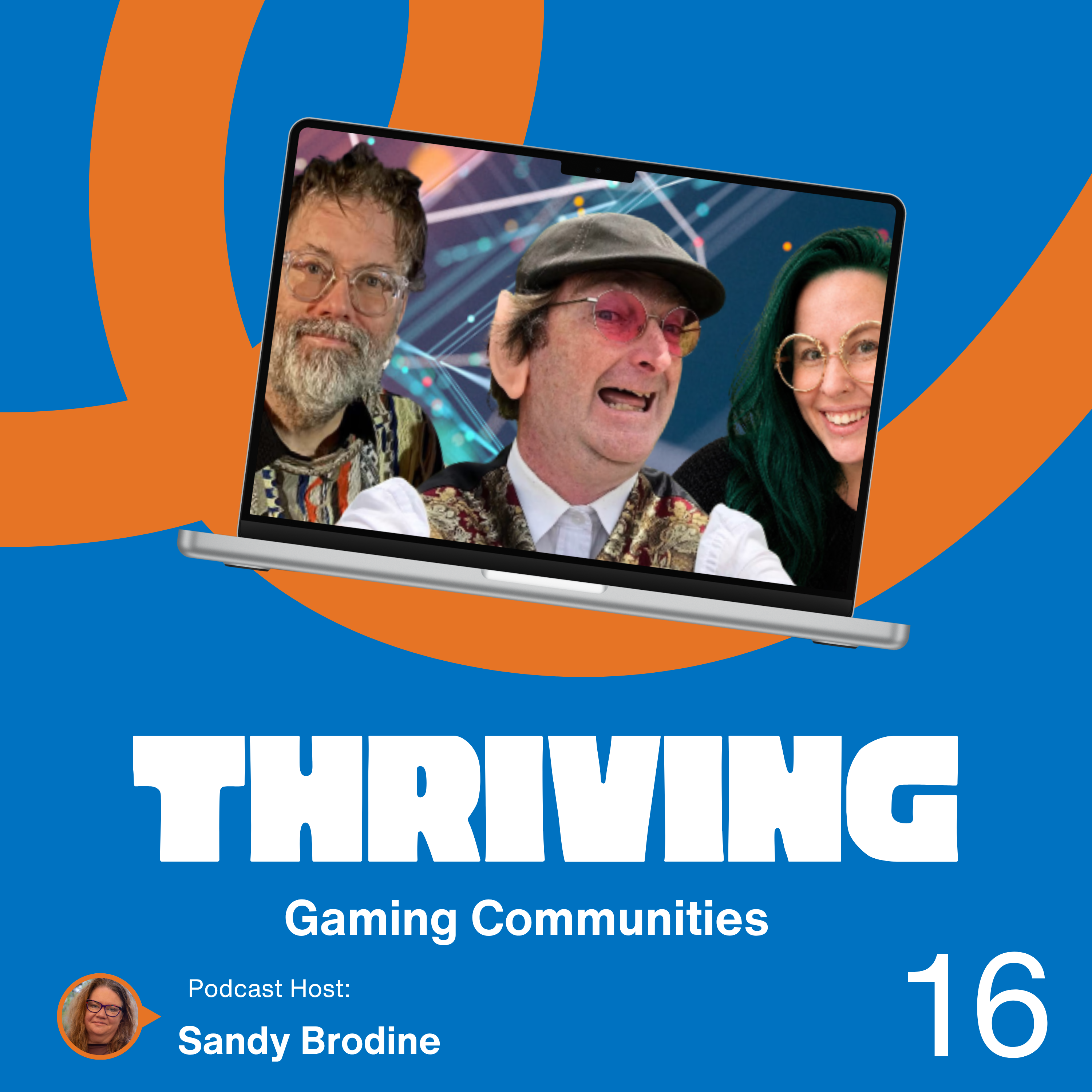
Welcome to Thriving. It's really exciting to be here with two friends who are even closer by than a lot of the people I've been interviewing. We've got Kelly woods, who you will know is my colleague from the younger Gen team, and Will Nicholas. Kelly and Will are here to talk about digital communities today.
So Kelly woods is Pastoral hair in the digital world and Will Nicholas is Odd Rev in the digital world. And mine is Rhodes or Rev.
[00:00:45] Speaker B: Cats.
[00:00:46] Speaker A: Broads. Cat. See, I can't even remember my own name, so. So it looks like you use it or lose it.
[00:00:51] Speaker C: That's the way it goes.
[00:00:52] Speaker A: So now I've added myself as having a digital name that I can't remember. I wonder if you. We could start by saying why are you different people in the digital world?
[00:01:01] Speaker C: That's a really.
I mean, we run into this. We've run into this with. With Code of Ethics and like a title, it's. And in fact, we're more authentically represented with our handles when we're in a gaming setting or a digital setting by actually using those names in that space. I'm a congregational Minister with the St David's congregation in Geelong in. In Melbourne or near Melbourne in Victoria.
But I also exist, I guess concurrently in the digital space. Odd Rev is my handle. I am the producer of the Never Odd or Even video podcast program which actually tracks the intersection between faith and science fiction. And so I really enjoy bringing the integration of those different selves into space. And yeah, that's. That's me. My wife is also a minister. I have three wonderful children and a beagle called Winchester Apostle Hair.
[00:01:57] Speaker A: Who are you in IRL and digitally speaking?
[00:02:01] Speaker B: Yes. So I am Kelly woods in the real world. I work alongside as your colleague. Did you know I share a desk across.
Across the office from you? But yes. So yeah. So where your role looks at resourcing and strategy, mine does new communities and digital communities. But not new as in brand new, like church planting, if that exists. Amazing. However, new as in how are we looking at new forms of church that the institution might not recognize as a formal kind of familiar space? So what are new ways of doing things?
And though the digital world has existed for like decades, we have been in online communities forever, including my whole age. Digital communities have existed my whole life. It is seen as a new space for the Church. So here I am to talk about it.
[00:02:51] Speaker A: So if we talk about thriving digital communities, I suspect we're not talking about.
We're meeting in our building on a Sunday morning and live streaming to YouTube. That's not what we're talking about, is it?
[00:03:06] Speaker C: Well, it could be, but. But it's kind of like saying, you know, is my toaster an appliance the same as my oven or my microwave in the kitchen? Like, there's a sense in which, I guess at its basis level, a step into the digital space is broadcasting on a Sunday morning. But the question you asked more specifically was around thriving.
And my personal opinion is you need to be able to do far more than just broadcast if you want to generate a thriving community in the digital space.
[00:03:38] Speaker B: Yes. So broadcasting is just one space. And I suppose that gets a little bit more into our handles as well. Like, you can exist in the online space this way, you can exist in the online space without having a handle or a name. But one really big part of digital culture is having a handle or an avatar, or I suppose more colloquially we'll just say a username, and it's an identity marker. So you know that you've really entered the digital world when all of a sudden all the names on here look different, but it's chosen. It shares more about you. This, my handle, Pastoral Hair, tells so much more about who I am than Kelly Woods. But at the same time, I think it allows us to break that open. So as much as you can have a thriving community in YouTube, it only exists as good as you identify in that space. If you don't identify being a YouTuber, then you're just broadcasting anywhere. So depends on that.
[00:04:32] Speaker A: And so odd. Rev, you were saying something just then about being present to one another or gathering together being important for thriving. Can you say a bit more about how you can actually be present to one another or be together in an online community? What for those of us that have never done it? Well, I'm. Obviously I have. But if people have never done it, what is it?
[00:04:52] Speaker C: Well, the very simplest way, especially if broadcasting is all you have, if you're starting out, is actually to acknowledge that if you are in front of a group of people on a Sunday morning and you are broadcasting to YouTube, that you actually spend as much time acknowledging the people who are not in the space as the people who are. And, and, and recognizing that the experience of the. The gathered present is only one experience that's actually taking place in that space. And that can affect the way we actually do prayers, the way we preach, the way we distribute communion, all of those things actually need to incorporate a community wider than the people who might be physically present in that space. And even then, I'm careful when I use the word physically present, because for the people who are at home, they are physically present to the space they are in. They have not. They've not shed their bodies and their physical self in order to actually engage online. They're just doing it in a very different way. So from a basic sense, in a broadcast perspective, that's step one. But I have to say, the rabbit hole goes so very, very deep when you begin to think about what's possible in terms of relationship and interaction and participation in the online space.
[00:06:06] Speaker A: So is this where you talk about third spaces? A space where even though all three of us are actually sitting at our computers, at home, in our own homes, very far from each other, we're actually in a space together now with the same background?
[00:06:23] Speaker C: That's right.
[00:06:24] Speaker A: What is a third space?
[00:06:25] Speaker B: Yeah, well, I think one good way to understand a third space. And so St. Jane, who is also part of our online digital community, describes it in a really cool way. She talks about how we use space as an interchangeable word with place, but space is also an interchangeable word with context. And so when we enter a digital space, we enter a digital context, we're adding another context of engagement. So these different environments, we each have our own physical environment. And when we gather in the same context in a physical context, we then have the same shared gathering space. But then as soon as we go to the digital world, we've split those. We have your physical space, then the person who's on the other side's physical space, and then the mediated digital space in between.
So understanding that context makes it a bit different.
[00:07:12] Speaker C: And then in a gaming sense, it can become even more complex. Like, I've recently just started playing World of Warcraft again with a number of my ministry agent friends who I won't out unless they want to be outed themselves. But when we log on to the game, we appear in a different space inside the game. And so one of the questions we might ask each other when we arrive is, where are you? I'll come to you. And so somebody might be in Stormwind's Cathedral and somebody else might be out in the fields of Goldshire. And so we have to physically move our avatars from the place where we've logged in to the place where our friends are so that we can gather and participate in the same. So so then you've actually like the third space becomes a global space in the same way as we might actually experience in terms of the separation of the three of us here at the moment.
[00:08:01] Speaker B: Yeah.
[00:08:02] Speaker A: If we're doing digital online communities, this about like a program approach. Is this like creating something that's a program, or is it actually about somehow being together and making meaning together around life and the gospel?
[00:08:16] Speaker C: Yeah, you're definitely making meaning. Program's a really interesting word because it means something almost completely different in the digital space too, because the program we are using to actually participate, the software that we're using to participate today, is far more useful in terms of talking about that. And we tend to use multiple pieces of software in order to make one experience happen. So when we're running Sonderverse, we'll be making use of Discord, which is actually a program or a piece of software that allows us to interact from a chat perspective and to share files and to explore those possibilities. As well as Twitch, which actually allows us to physically broadcast and in that it has its own chat software, which actually. So there are multiple programs that are intersecting. And I know that I'm using the word program in a different way to the way that you used it a moment ago, but in some senses, if you think about it, mono programming, which is what we often do in, in the inverted commas, real world, is quite limiting, whereas multi programming or multi platforming is what the digital space requires in order to create a meaningful gathering.
[00:09:22] Speaker A: Do I have to understand Twitch and Discord and all those things if I want to join you? Like, to what extent do I have to kind of get all that techo stuff?
[00:09:30] Speaker B: Depends what you mean by join. If you want to join in with us on a community for somdiverse, no, you don't. But you do need to understand how to at least log in. So the beautiful thing about Twitch, one big thing, when we started to talk about what's thriving, a lot of times digital spaces have this fear of being too open where anybody can come and explore and you, you don't know who is behind the screen. And so it's this, this fe of nervousness though what we realize in the digital world is that like it's, it's a whole different pasture, it's a whole different community, a whole different network. And you need to allow for spaces for people to see what's happening in your pasture. Otherwise that, that ability to, to be curious, to see isn't there. So Twitch is a platform that we've gone with because we both Odd Rev and I are gamers and that's where gamers hang out. But then our encouragement would be to take the next step deeper, which would be create a unique username login and come and chat with us. And if you want to get deeper than again, our membership, I suppose is then create a discord profile and come and join our community outside the gathering times. So program, yeah, program isn't just a one time thing. It's seen as that which helps people participate in the full life of a community. And I think the digital space helps us to see that programs are just one way of engagement and we've relied so heavily on them when we're all in the one context together. But they only ever were for a pathway to come into the gathered space together.
[00:11:00] Speaker A: Sondiverse is an example of a thriving digital community, I want to say, but you know, that's not even true. If I was to turn up on a Monday night, what does it feel like? What does it look like? What is it? What is Sonderverse?
[00:11:16] Speaker C: Well, you could enter it just like you would enter many other digital spaces by actually typing in the URL. Twitch, Twitch tv Sonderverse Community. And that's all one word. And so as, as Kelly just said, you don't actually need anything else, but to enter that in, to be able to go to that, that web space and when the live show is on on Monday night, you would be able to see everything that was being broadcast, just like switching on the TV and going to the appropriate channel to see that as a live broadcast. If you went to the trouble of making a login for Twitch and had your own hand, there would be a chat window where you would be able to type in your thoughts and ideas, which you would be encouraged to do while the broadcast was on. Broadcasters would be able to see and respond to that, and everyone else who was gathered in community can also see and respond to that chat as well as that in an offline sense. Once you've got a handle and you go to that space, you can see clips and highlights from not only this week's broadcasts, but previous broadcasts. And, and you can actually see previous shows as well that have been saved there, and they're all listed with the particular Bible verses or studies or teachings from that particular week. So there's quite a catalog now of information that you could go and have a look at.
[00:12:37] Speaker A: So you talk about the Bible?
[00:12:39] Speaker C: Yes, we do, absolutely.
[00:12:40] Speaker B: I know, I'm sure every week. So we look at, we follow the lectionary, the revised common lectionary, but we chat about the upcoming reading. So whatever's happening on the Sunday, the following Sunday, we talk about it on the.
So I like to make the claim that we're probably the first ones in the globe to be looking at it, because we're in Australia, so we're the first on the time clock, and we do Monday, so we're good. So you can also use it as a resource if you would like.
[00:13:05] Speaker C: So unless there's a broadcast that's coming out of, what is it? American Samoa, we're definitely getting in there.
Yeah.
[00:13:13] Speaker B: Be more than happy to lay the claim down if they would take it up. Absolutely. So we look through the lectionary, but we spend in a stream anywhere from 20 minutes to half an hour looking at a particular piece of scripture. And that scripture, with the chat open, everybody can comment in it. And I think it's the fun part, because as much as we call it alive and a stream, there's a broadcasting service element. We start with acknowledgment of country. We then move forward into gathering, and then we go into our scriptures, we do the Bible reading. It then flips into study, it flips into exploration and curiosity, and everybody's welcome to the table for that. And it's so much fun because it gets taken in places we never thought. And Audrev and I have been in a situation where we've been online with a colleague, and all of a sudden the chat was doing one theological exploration, we were talking about another theological exploration, and then we're trying to weave them together, and it was beautiful. I don't think I've had that much depth in any of my youth ministry for the decades that I've been a part of it. It's so rich. It's beautiful.
[00:14:16] Speaker C: When Kelly says everywhere it legitimately leans, everywhere. We've had people from Canada, from the United States, from Scotland, from parts of Africa and Asia who have actually tuned in. And we've actually had situations where somebody in the middle of the night has woken up and not been able to go back to sleep. And so they've logged on to Twitch, wondering what they could look for. They've searched for faith, they've found us, and they've engaged in a conversation with us.
And so we can never be sure who's going to be there or what's happening or what might happen. And as well as that, anybody who's done anything with the Internet will know that stable transmission is not always a given. So sometimes we run into glitches. And flaws and problems. But that's all part of the journey.
[00:15:00] Speaker B: Yes. It's also the fun part, because what helped us acknowledge that, like, to really help us identify what made us know this was a thriving digital ministry or a digital community, not just a digital something, was that one time we were broadcasting, and we were so delayed that we finished the broadcast. And it's the upload download. So for every upload of us speaking, people were only being able to download seven seconds of it for every 30 seconds. So it's really slow. So for 30 seconds, everyone was only like. For 23 seconds of that, it was just dead silence and a video buffering. So by the end of it, odd rev and I got to join this live at the end with the community, because they.
[00:15:43] Speaker C: Because we finished before they did.
[00:15:44] Speaker B: Yeah, yeah. And we didn't log off. So we actually got to jump back in and do this really meta moment where we then became a part of our own chat with everybody else, and no one logged off. In fact, I think the people actually grew in terms of how many numbers were engaging online. Audrev and I were like, why are we even here?
We're like, well, actually, this is why it's community, because people are finding belonging here and space here and just being able to connect and be with one another. Not just about listening to a random video online, it's about.
[00:16:15] Speaker C: And we've had other situations where the feeds dropped out for us entirely.
And the group, they're not dependent on us to be a group for the feed. So all that's left is a chat that's open. And what's happened is the people have continued to have the theological conversation that we were having until we resumed the regularly scheduled program. And so I guess if. If that were to happen in a. In a standard congregation, in a physical sense, it would be like the minister suddenly disappeared, raptured off to some other space, and the congregation continued to actually engage with the material that was present.
Minister returned. Imagine if the minister said in the middle of the service, hold, everybody, I've got to go to the bathroom. I'll be back in 10 minutes. Just talk amongst yourselves, you know, But. But that's what happened with. With that particular glitch.
[00:17:04] Speaker A: So you're basically saying to me that these people in this community have developed a shared life where they. They know each other and they're actually in relationship with one another, even though what they're doing is online.
[00:17:18] Speaker C: Yep.
[00:17:18] Speaker B: Yes.
[00:17:18] Speaker A: Even though they're in different countries.
[00:17:20] Speaker B: I would also share a bit about that as well it's because they're online that they've having a shared life together. It's not in spite of it. And I, I find that particularly when we get to, you know, I'm trying to think our majority age group who gathers online, we have all ages ranging from they've had a birthday so they're 12 and 13 and they tune in with their mum all the way through to some people who tune in online. Once we had, I'm not trying to out who they are but they were a 73 year old who came online and did some gaming. And the most common space that we have are all those who have grown up with the digital era being more than just an idea, but it's been integrated into their very existence. So spiritual formation has happened with the digital space by the digital space, not in spite of it. And so to gather online and form community as digital beings is just really first nature for some people and so why not offer a space for them together?
[00:18:18] Speaker C: Many of the people who we meet there we didn't know beforehand and I mean there are really two groups of people who are in part of the community. There are people who are actually logged in and chatters. There are another group of people and forgive the Internet term are lurkers, which is the term given to a person who enters a digital space but doesn't proclaim themselves. I tell you what, there have been lots of chatters churches I've gone to in a physical sense that I would have preferred to lurk in than to actually be physically revealed in. And, and like I've had situations where here in Geelong I've been going through the drive through at kfc, somebody's recognized my glasses and said I watched your thing on, on Monday night and I thought it was really, really good. And likewise in the context of the schools I work in, I'll come across staff and students who are aware of the conversations we've had on a Monday night but have never proclaimed themselves or felt that they needed to do any more than lurp.
[00:19:16] Speaker A: So that's like people who go to cathedrals because you can just pop in up the back and nobody kind of welcomes you and tries to make you feel good and you can actually just be anonymous in a cathedral in a way that you can't be in a local congregation where you turn up five minutes and they say oh, would you like to come on the Vestaligh? Which my father, when he came back to church after a decade away and he went and walked out the door and never came back because the last thing he needed was to be invited onto a, onto a committee the moment he'd walked into the door. The fact that I used the word vestry will tell you it was naughty in own church.
[00:19:50] Speaker B: Sandy, you've mentioned a really good point, and I think it's one part that really helps us understand how we make sure we're developing thriving communities is because in the digital space you need to understand your platform and what, how people enter and how people engage. Because one thing that we found. So Twitch has this cute little thing in the corner that has a little eyeball which tells us how many views that we have. But odd rev, when you look at the site backing shared with me earlier this year, our little eyeball has anywhere from average between 7 to 13 people on a Monday night. But when you look in the back end, we actually average 23 to 28 views. And it was because only the eyeballs are those who've logged in. So we're actually having our biggest contingent of people who actually hang out are our lurkers.
And we wondered why. So the question then became, rather than how do we reach people? It's like, how do we encourage people to log in and come and chat together?
Why is it that they're lurking? What, what is it that they're gaining or gleaning from this space?
[00:20:51] Speaker C: And does it matter?
No.
[00:20:54] Speaker B: Exactly. And who are they? Because we found a large contingent was when a few of the kids at the local school went, no, this is how you log in without people knowing that you've logged in. We're like, thank you.
[00:21:05] Speaker C: And it goes beyond that because that's just the live figures that, that Kelly's talking about there, that if you start to look at our, our unlived figures, our engagement figures, that asynchronous engagement, then we actually end up with numbers closer to 130 to 150 during a week.
And so, you know, it's hard to gauge exactly what that means because that could be anywhere from a 3 second view to watching the whole thing.
So somebody might have just come in and gone, nope, I'm not interested in looking at this.
Or they may have stayed. So. So there's those kind of figures as well that actually show there is a definite, I guess, wish to be engaged in something in this way, but not necessarily to be known in that space. And what's really great is that some people who are regulars with us now were people who started as lurkers and are now actually regularly, regularly engaging.
[00:21:59] Speaker A: So could, can you create an ecology online where people can actually come to faith or grow in faith. Is that possible?
[00:22:07] Speaker B: You're using the word ecology for those who know. The other space that I love is moss. And I shared before because we've spoken about it. And Odd Rev, I have not forgotten about the other word in there, but is the edgewalkers book. I'm sharing it cause I have my digital copy on my Kindle. But in here there's a chapter that we write about the digital world. Well, I write about it. We. Odd Rev, you're mentioned in there multiple times. But we share about how the digital forest is a different space of growing and there is the flowers and different from how we would see and acknowledge them afterwards. But that doesn't mean they're not growing. So yes, you can have an ecology here for growing faith and discernment and people coming to faith here, but it might not look the same. And so the metaphors that we've really clung to, moss. I love moss and rooting and not roots and all that kind of stuff. And Odd Rev has really connected with fungi and the mycelium network and mushrooms and what it means to have fungi popping in random places and how do we connect and be and grow and flourish as a wider network.
[00:23:15] Speaker C: And I find it fascinating that we've both come to such an organic framework to describe what is a digital space. But when you're thinking about networks, especially when you start to move into the area of mycelia that often what we have is fungi, fruiting bodies is what we think the. The whole thing is a mushroom popping up in one place or another. But the actual mycelial network that's underneath that body might actually be acres and acres and acres of land that. That the mushroom you see in the field half a mile away could be the same being as the mushroom you're actually standing next to. And. And so when we think about that, it changes the way I think about communities of faith because we often think that the. The fruiting body, or, you know, a congregation or a program, as we put it before, is the beginning and end of everything. But the reality is there's no fruiting body without a mycelial network that actually connects it all together and runs through everything that's happening. And so it actually opens up a doorway to think about things in an entirely different way.
Just like when we're working in the digital space.
[00:24:19] Speaker B: Yeah. And I suppose a good example. So in the edgewalkers book, I share a couple of examples about what people that fruit might actually look like, and what the phrase I've spoken about is our spiritual agility and what's grown in the digital space. So in gaming, we actually do so much faith formation that happens just in games because ethical conundrums through to, like, figuring out how to act and be as characters within spaces. These are all internalized formative work and language that we talk about all the time, but we're actually playing it and enacting it. So our job then in the digital space, because our. Our particular community, our gamers, we then would then engage those formation questions a bit more and be like, why did you choose that? Or if we did that again, what would you do differently? Or another great example is, yeah, someone logging in online. It's my favorite example. And just being like, I used to. I used to hear from God all the time, but I haven't heard God's voice in two years. What am I doing wrong? We're like, out of, like, you've come to twitch a gaming platform and found Christians to ask this question to. And so that shifted again. And being like, how do we journey with this young person? And we've had other spaces. Odd rev. I'm laughing at that time. We're playing a computer game. You were. And we thought we had found someone engaging and chatting with us who was quite agitated about our spiritual connotations, only to then realize they're a person of a completely different faith. So we had to swap from talking about formation to having interfaith dialogue, having an interfaith conversation.
And it was so fascinating and rich, all because we're streaming again.
[00:25:53] Speaker C: I think that's why I responded to your question about create so intensely before is that I think that we don't create. It's actually.
It's already there.
Like, if we walk into a forest, we don't create an ecology. We actually experience an ecology that's already there. And as Kelly said in gaming terms, much of our theological language and content is already being incorporated into so many different kinds of games. You know, everything from the idea that the energy that we use, the spiritual energy we might use to manifest things inside the game is called mana. And. And so there's all kinds of symbolism and names and. And narratives that actually are. Are rich theological narratives already in use in this space. And often the people who are using them don't know that they actually come from a religious context or a theological context.
[00:26:48] Speaker A: So you Sonderverse, which is a. An online community, do you get involved in any other digital or live kind of gaming things at all?
[00:26:59] Speaker B: Yes.
I will share though. Long before Sonder verse was a thing, I actually was part of a group. No vetamorphos. I feel like it's a good thing that we should know. So it's a Cert 3 in Christian Ministry and Theology that Year 11 and 12 students can do.
And long before Sonderburst was a thing, we were running online discipleship formation groups. For 2017, I think was our first online discipleship group. So we were hanging out in that space doing discipleship and formation intentionally as a mentor, peer group, supervising space. And that's just one example. I think the pandemic allowed people to have they dipped their toes in but saw it as a solution for a period of time. So they used it as a mechanism rather than the engagement space. But we also do RPGs together. We do our D and D Night Staggerheart, Odd Rev. You do your World of Warcraft. You do a bunch of other stuff too.
[00:27:55] Speaker A: Yes.
[00:27:55] Speaker C: Third space can be a gathering space that's a liminal opportunity like. And often I've seen people body doubling inside Discord and them being in their office space, me being in this or others being in theirs where two people might be working on completely different and distinct things and just being present to each other while they work. All the way to making use of web based gaming platforms like Board Game arena where we can play a board game together that's been fully uploaded and all the way to the most bizarre of them, which was Zombie Church. The opportunity to explore a zombie apocalypse together as a band of hopeful survivors. And in the midst of that, deciding to restore an old rotting church. So there's been been so many ways of engaging in the digital space.
[00:28:45] Speaker B: Yes. And we used UCA Polity in our Zombie Church. So it was a full blown uniting church. They had orange and blue hats for voting.
[00:28:54] Speaker C: So we had consensus Mark. Yep. And that was part of the avatar costuming.
[00:28:58] Speaker A: If I needed any proof that you are nerds.
Yeah, I now have it. Mind you, I have orange and blue background for thriving podcasts. I don't know if that's accidental or on purpose.
[00:29:08] Speaker C: I noticed there's a lot more blue than orange.
[00:29:11] Speaker B: So this idea, I promise,
[00:29:16] Speaker A: yes, no,
[00:29:16] Speaker B: I will claim that nerd title proudly. Nice.
[00:29:19] Speaker A: So if people want to know more about how to grow a flourishing or thriving digital community or want to read more. Kelly, you were just flushing a book at us.
[00:29:28] Speaker B: So Edgewalkers Reimagining Faith, Church and Theology.
So that's the COVID which I'm using on my phone because I have a digital copy because you can get it on a Kindle. So I'm one of 20 authors in here that looks at many different thriving ministries that are happening on the edge of the familiar. One of the chapters is the one that I write on digital but there are 19 others that you can explore. So it's amazing.
[00:29:50] Speaker A: It's a jolly.
[00:29:51] Speaker B: That's one space and the other one which I always plug, you should go to neverodereven.com or oddrev.com because odd rev.com oddrev.com because on there is a plethora how many podcast episodes do you have of Exploring Faith and Fiction cycles?
[00:30:09] Speaker C: There are over 200 blogs around faith exploring faith and fiction in connections to some podcasts. You can also find the Never Odd or Even podcast. It's all one word. It's a palindrome. It's spelled the same way forward as it is backwards. You can find that on on Spotify or Apple or wherever it is that you listen. I've put it in lots of places and we've covered a whole range of faith and fiction, Star Trek, AI Grief and and we're actually got a new project which we're actually going to be looking at in the Marvel universe coming up later on this year. Sandy's going to be one of the co host that as well as Glenn o' Brien and we'll be looking at the new Marvel offering called Vision Quest which will actually be all about the way in which AI is actually engaged with in a meaningful and theological way. So if you're interested in exploring that then that that series will be coming out on Disney plus in in October and the podcast will be following shortly afterwards.
[00:31:08] Speaker B: So that's and there are hundreds and hundreds of episodes so you can binge listen for a long time.
Other than that, you can go to odd rev.com or pastoralhair.com and you can connect with us and we can point you in many different directions. Whether it's Messy Miners to you Sandy, through to podcasting, through to XP film series with James Baker who was started in South Australia, through to Spiritual Misfits or Filthy Hope. All of these different communities who are doing digital ministry, we're all networked and connected. So we'd always love to be able to connect you guys through to many thriving places spaces.
[00:31:40] Speaker C: And that's one of the most wonderful and fabulous things about the digital space is that we just find ourselves collecting spaces so we don't actually create one space. But as we actually discover new spaces, we share those into the channel on Discord, we take the opportunity to create links. And so the moment you've got a hyperlink from one place to another, you're not only discovering what we produce, but what everyone else produces as well. And I think that's the real expansive, exponential beauty of the digital space.
[00:32:11] Speaker A: So if this hasn't absolutely whet your appetite, what's wrong with you? I say, but seriously, this is exciting, exciting, cutting edge, on the edge, edge walker territory where people are connecting from all over the world and all works of life, building community, coming to know Jesus and developing thriving community. And we'll put some of those links in the in the show notes so that you can find them wherever you go.
And find Pastoral Hair and Odd Rev and Sonderverse and get involved.
[00:32:41] Speaker B: Absolutely.
[00:32:42] Speaker A: Kelly and Will, Pastoral Hare and Odd Rev. Thank you so much for joining me on Thriving and opening the door to thriving digital communities for our listeners. I've really appreciated the chat.
[00:32:54] Speaker B: Thanks so much broadcast.
[00:32:55] Speaker C: Thanks, Sandy. Bye for now.
[00:32:56] Speaker A: See ya. Bye.
Thank you for listening to Thriving.
This podcast is hosted and produced by Sandy Brodine. If you have enjoyed Thriving, don't forget to like and subscribe. You might also like to share with your church community or friends and talk about how these ideas can help you grow your thriving community of faith. We'll see you next time.