Episode Transcript
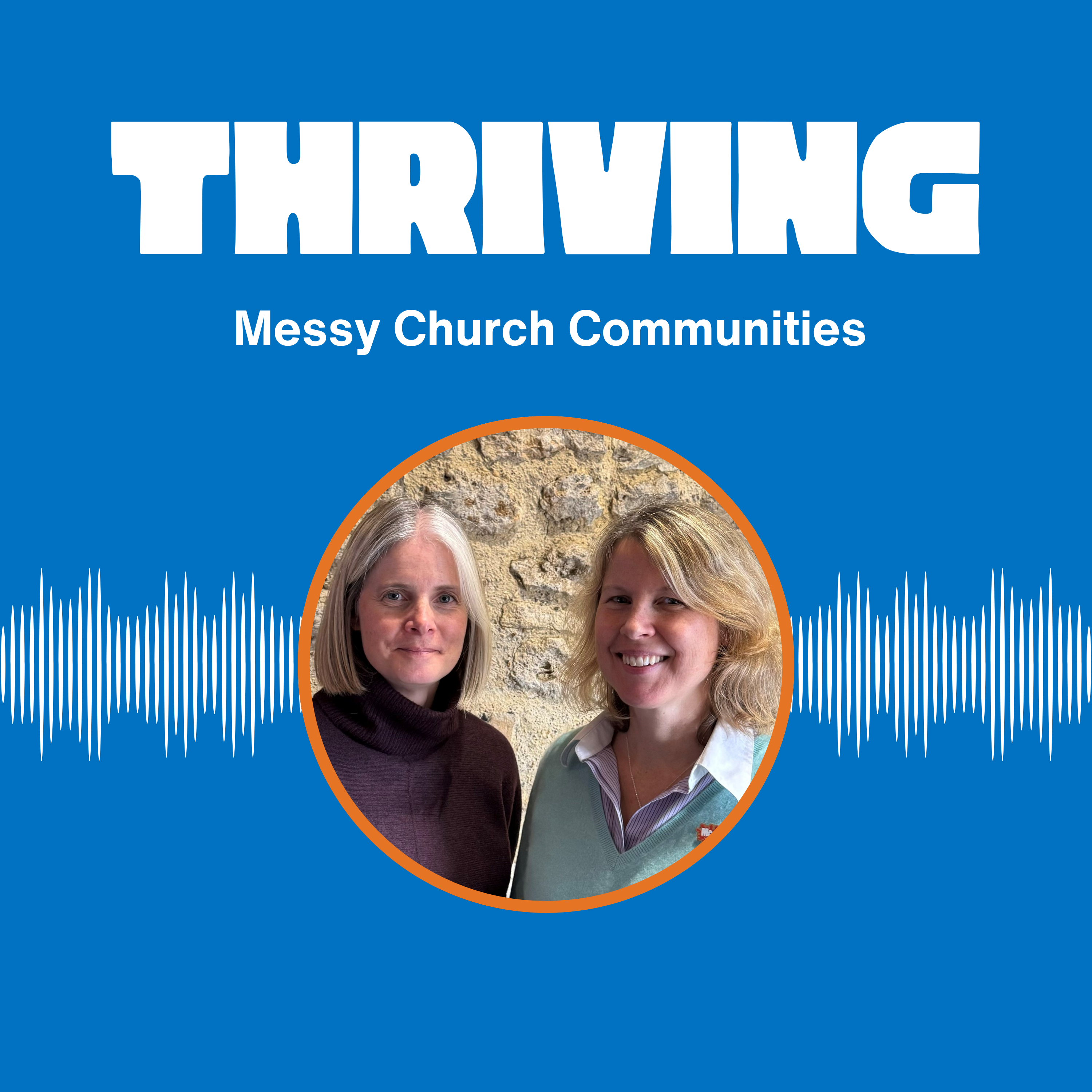
[00:00:00] Speaker A: Welcome to Thriving, brought to you by the discipleship and advocacy team of the Synod of Victoria in Tasmania. Produced on the land of the Wurundju people of the Kulin Nation. Good morning everyone. I'm here with Ika Kennett Brown and Jane Butler from Messy Church brf. And it's really exciting to spend time with you both and talking about messy church. This podcast is called Thriving. And so the conversation today is around how does messy church help grow thriving communities of disciples of followers of Jesus? So we're at Ike's home here in London and we've had a lovely day of meetings together and now it's time to do some recording. Do you guys want to just introduce yourselves and then we'll talk about messy church?
[00:00:48] Speaker B: Well, hello and welcome to my home. It's lovely to have you here with us today and lovely to have you, Sandy. My name is Ika Ika Kennett Brown and I'm BRF Ministries Messy Church Ministry lead. I've been doing this role around four years now, but I also help out in a local messy church that meets on Greenwich Peninsula in an all through Church of England school and we meet on a Wednesday straight after school.
[00:01:12] Speaker C: And I'm Jane Butler, I'm the Messy Church training and development lead and I've been at BRF Ministries for five years now.
But I've been involved in my local messy church for about 16 years.
[00:01:23] Speaker A: Fantastic. So Messy Church has been in Australia for almost that long and we've, we've got some messy churches. So the one that I used to leads now 14, 15 years old nearly. And so, so some of us are really know about messy church, know what it's all about. But there's a whole lot of people that are just finding out about messy church and are really interested in it as a model for growing Christian community. So can you tell us a little bit just for, for new people, how does messy church work? What does it do?
What's it like?
[00:01:54] Speaker B: Well, messy church is a way of being church and it's based on five core values. The first, that it's Christ centered. The second, that it's for all ages.
The third is that it's about creativity.
And then we've got hospitality and celebration. So those are our five core values. The messy churches are happening around the country, around the world and they generally meet at a time and place that suits the local community that you're trying to reach.
They can happen on, you know, a different day of the week. Some happen on Sundays, but some like mine, happen on a On a Wednesday, straight after school.
And it's a time of gathering people together.
You may, you will explore the Bible story and theme through creative or sporting or gardening activities.
There's a short time when you gather together to share story, pray together, you may or may not sing, and then you have a meal. So that's kind of the rough format based on those five core principles.
[00:02:58] Speaker A: And does your messy church work in a similar way, Jane?
[00:03:00] Speaker C: Yeah, pretty similar. We're a Sunday afternoon group.
Yeah, similar. People come in, get stuck in, work out the theme, the Bible passage that we work their way through it, short time of celebration and then a meal together.
We also, we're really fortunate to have access to a really big outdoor space. So we try and do some stuff outdoors as well.
And we have on occasion gone somewhere else to explore a particular theme. We met in some woodland relatively recently to do one of the messy adventures, which is our outdoor resources on wild woods. And yeah, so, yeah, similar.
[00:03:39] Speaker A: I found the starting with the activities, people get a bit confused about why you do that without having heard the story. But messy people turn up late, messy people turn up when they turn up. And if you're just coming into a room where people are doing stuff, it's easier to walk into a space than it is to walk into a church where there's what we would call worship in traditional church and what messy church calls celebration. So I quite like the starting in that way with everybody just getting stuck in, as you said to the story.
[00:04:10] Speaker C: Yeah, people do that welcome in different ways, don't they? We used to do a bit of a story as they arrived. We used to introduce the Bible theme. But we, as you say, we found that people were coming in later, particularly if you're an after school. You might be waiting for different schools to finish and come in.
So a soft start, maybe with a snack and some refreshments.
I recently heard from a messy church who they have a kind of welcome activity, some kind of general activity activities. And they have the main activities related to the. The Bible story covered over. And there's this kind of exciting sense of anticipation of what they're going to discover when they're ready to kind of release them into the space. But I find it's really a helpful way for new people to come in because you know, you have someone to welcome them as they come in. But they're. People are kind of, there's no kind of. They're not noticed or they don't stand out. You can gently kind of put bring them into the space Have a chat with them and get them comfortable with something they feel drawn to.
[00:05:11] Speaker A: So it sounds to me like what you're saying is that messy church isn't a programmatic thing where you must do it the way that you're told, that actually people in different places are free to change up how it works for their own setting. Is that what you're saying?
[00:05:25] Speaker B: Yeah.
Well, creativity is one of our core values. So we invite love, local messy churches to be creative within their context. So we say to them, you know, look at these five core values, and when we walk into a messy church, we'd love to see that it is Christ centered for all ages, creative, hospitable and that sense of celebration. But the order that you do things in experiment with it might be, for example, if you some meet on a Saturday morning, but they start with breakfast, so you start with a meal and then, because everybody's already gathered, then you might share the story and then you might go out, explore the activities and then come back together for like a plenary time of learn what, find out what everybody's learned towards the end and prayer before sending out. So it's. You've got to adapt it to your particular context, but keep it based on those five core values.
[00:06:16] Speaker A: So you call it messy church.
It happens once a month.
And do the kind of important things of church happen, like baptism and communion and prayer and all those things that we would think were kind of core to a worshiping community. Do those things happen in messy church?
[00:06:33] Speaker C: Yeah, no, absolutely they do. We've just actually delivered a couple of training sessions on baptism and communion in messy church. It's really important markers of us being church together, but what we try and do is a uniquely messy way whilst honouring those sacraments in a messy church space. So again, helping the local context. Obviously we're ecumenical, so honouring the sending churches traditions, but finding a way that means it makes sense to the family or the individuals or the people that are wanting to celebrate that baptismal communion in that space.
[00:07:16] Speaker B: There was a bit of research that was done back in 2019 called playfully serious, and it looked at sort of different fresh expressions of church and people who saw messy church as being more of an outreach model and sort of messy churches that were aiming for it to be church for those people.
And actually we know from our most recent UK survey, for at least 50% of people coming to a messy church, this is their only church. Some will go on and explore what your wider church has to offer. And that's absolutely brilliant. And it's really important to make those connections. For some people, this will be the only congregation that they attend. So it's really important to make, make it church for them. And this piece of research showed that messy churches that were aiming for their gathering to be church started to introduce communion. And we're seeing baptisms happening. But for messy churches that saw it as a way through to maybe a Sunday service, or maybe they could only do it through three times a year, were less likely to see communion and baptisms happening during their messy church.
[00:08:22] Speaker A: My favourite Melbourne story of this at our, at our messy church was we always, I always like to have the activities feed into the celebration. So we made grape juice with the kids with gloves, like kitchen gloves on their hands and, and pushed the grapes through a sieve and made this quite disgusting looking grape mixture. And then we also made flatbread and so we use that. It was disgusting, but the kids were really excited that they had made the stuff. When we walked into the church, there was. One of the mothers had never had communion before and she had never expected that someone like her, in her words, would be welcome to take communion. So she started crying as we came in to take communion. And I was kind of like, are you okay?
[00:09:10] Speaker B: What's going on?
[00:09:11] Speaker A: And she said, oh no. I'm just overwhelmed by the fact that I'm welcome here to be part of, of this, of communion. I never thought that was something I would ever be welcome to. And it was really exciting experience of just how important that can be for people who've never experienced experience that to be welcome.
[00:09:33] Speaker B: It's interesting when you do introduce communion into a messy church, it does open up a lot of different God conversations. We have a lovely story of a message church that on their fifth birthday they decided to do communion for the first time. Then another year went by and on their sixth birthday they did it again. But the key thing afterward is that as a teen they all said, oh, I had this conversation with that person. And they realized amongst the team they'd had five different really significant God conversations with different people.
So out of that they formed a little discipleship group for those groups of mums. And that group kind of group journey together. And eventually whole family started being baptized through that. But it's, it's something about that intentionality of reflecting as a team and saying, where are we noticing God at work?
What conversations do we need to follow up? Who do we need to pray for? It's very easy to go and do an event, come back and go, oh, that was exhausting. Then you move on to the next one. But actually part of discipleship is thinking about what happens in the, in between spaces between gatherings and how can you be church all month and what, what conversation do you need to follow up and who are you needing to pray for? So, so it's exciting to see how those sort of sacraments can be avenues to move people forward on a journey towards Jesus.
[00:10:57] Speaker A: So one of the things I know people say in Australia can be problematic is to get enough people for a team or how do you, how do you find people to be on the team?
Does it, does the team have to be all Christians? Do you have to. You're just talking about discipleship on the team. So that makes me wonder whether it's possible to grow people as Christians. Can you invite people who don't know Jesus to be part of the team? Is that, is that okay?
[00:11:22] Speaker C: Yeah, absolutely. I mean, I mean my own journey of faith is kind of. I've grown up as a Christian through messy church. I came to faith through the baptism of my eldest son, son who's now 19.
And I was invited by a friend to come along to something was mildly messy church, maybe not fully messy church. When he was a toddler I just went as a mum and then I was sort of, oh, Jane, would you like to read the story? Jane, could you help us prep this craft activity?
And I'm a keen aesthetic learner, so the kind of hands on and the visual elements of Massey Church just massively appealed to me. And I was basically learning stories and the Christian faith alongside my son. I grew up with him and I suddenly realised I was sort of slightly being nurtured into kind of leadership.
My friend who'd originally set up the group moved away so I kind of took over leadership of it with the Methodist deacon that we partnered with and then she moved away and so I was left kind holding the baby. But we've had over many years, it's, it's tough, isn't it? We all know it's really difficult to get volunteers and we've kind of gone with a model of. We have kind of a core team of people that think about, well, what themes, you know, what, what are we, what's our agenda for the year? What are we going to be, what stories are we going to be tackling, thinking pastorally and that, that kind of thing. But then we then, as Ike said, we sort of created this bit of a discipleship group of parents who were like me, you know, were bringing their children. I mean, I had a 9 year old come to us and actually ask about baptism. And then her mum said, I came along to this for my children, but now I feel a bit of a fraud. What can I do? So again, we set up a kind of a mother's Bible study group, but it became the planning for the session. So we'd study the Bible together and think, how can we help people kind of access this story? And they'd come up with the ideas and do a bit of the prep. So they're doing some upfront prep, but then they would be coming to the session with their children and you'd have this other team that would actually deliver the activities on the day. So it was a way of kind of. They didn't know they were planning and preparing messy church. But yeah, I think we've always. It's quite an accessible way for either newer or exploring Christians to start serving.
And yeah, you're discipling the team as part of messy church as well.
[00:14:04] Speaker B: So, I mean, in our training we talk about, you know, using your planning time as a discipleship opportunity.
So make sure rather than kind of arriving and going, right, I've got this great idea.
Start by opening the Bible. What is it? What's the Bible passage you're going to, to do?
We invite the practice of dwelling in the Word, where you read it through twice.
You invite people to notice what stands out for them before going on to plan the activities and also doing that reflective practice on what went well. Even better if where are we noticing God at work in the previous session? And all that takes people on a discipleship journey. And often when in a smaller group, you can have those more informal discipleship style discussions. Some messy churches get over 100 people and that's amazing and we celebrate that. But it's really, really hard to have those deeper conversations when you've got lots of, lots of people.
In our recent survey, the average number of messy church in the UK is 43 people. Two years ago it was 42. So it's growing slightly and we celebrate that because actually that's a really good number for you to get to have those conversations. And, and often actually it's drawing the parent, the carer into on that discipleship journey and giving them permission to play with the story through the activity and come alongside the child that they bring. So I know in our messy church, because it's at a Church of England school, a lot of the kids get a lot of stuff through their school and they're really up for it. But when it came to kids communion we were like saying to the adults, you know, it's for you as well, and, and drawing them in. And a lot of them felt, no, I'm not good enough. I couldn't possibly. That opens up other conversations that you can follow up with them.
[00:16:01] Speaker A: Fantastic.
I'm. I'm. So it makes sense to me now, the having it once a month. If you're going to do a whole lot of intensive work in between and discipleship opportunities in between, then having it once a month gives you time to do all that extra work that you're doing, growing people along the way. Is that correct?
[00:16:20] Speaker B: Yes. And you can do that in formal and informal ways. So your church might be running an alpha course or some kind of Christianity explored thing. And it's really important to make that invitation open to everybody who comes to your messy church as well.
It might be that you decide to run an intergenerational explore course. And I know we've produced some resources called Messy Basics that go alongside Messy Church. Get Messy Volume two.
So there you can explore the topic in your messy church, but then there's a, an additional discipleship course that runs alongside that.
So I, I've forgotten my thread of conversation.
[00:17:01] Speaker C: I think it's. There's other. You were saying other informal ways of doing this type of talk about your supermarket.
[00:17:07] Speaker B: Well, there's the informal. So it was a period of my time where most of my discipleship conversations happen with the parents in the supermarket.
[00:17:16] Speaker A: Oh.
[00:17:17] Speaker B: So I would end up having to leave an extra 10 minutes in my schedule because I would always bump into a particular or two couple of different parents and you end up having these conversations in the supermarket aisle. So. And it might be that, you know, it's thinking about the different opportunities. Where are you going to see those families during the month? Is there a core family who are also lining up at the same school gate? And, you know, you equip that family to have those conversations with their friends.
Or it might be that you're the person that's dropping off at ballet and you're seeing other people at those things. So it's those different things. It's thinking about that wider network and who are the people and the other places that connect with your community so that it doesn't feel just once a month. And the other thing that we've done is create a WhatsApp group.
So we. With the parents, so that's one way we can do some announcements. But then we ask them to, you know, they like to send in photos and stuff. So one summer we Sent them back with a sunflower seed to grow.
And as seeds started emerging, people started putting their pictures on the group and that was really lovely. And we were thinking about the growth of that faith over the course of the summer. So that was really, really positive way of keeping in touch when you're not gathered in person.
[00:18:40] Speaker A: So you just talked about sunflowers, you talked about gardening earlier.
I'm wondering about this new Messy Church Goes Wild movement. What's that all about?
[00:18:52] Speaker C: Messy Church Goes Wild is it's not a single thing. It's kind of a movement within messy church as a whole. I think if you look back at some of our earlier activities, well, it could be seen as quite a stuff hungry format. We were making things. There's a perception that there's a lot of craft in there and obviously we're aware, you know, there's a growing need for us to be more environmentally aware in everything we do.
But we're also seeking to, you know, for people to care for God's creation and to sense God in creation. We know that there's lots of evidence that adults as well as children feel closer to God in the natural world. So I think people will notice that in our newer materials we try and be more sustainable in that.
So we're not rendering recyclable things unrecyclable by putting plastic googly eyes on everything, that sort of thing.
But we also, I think kind of hastened a little bit by Covid, certainly here in the uk, the first time we were able to gather in any kind of groups were outside.
And there was a kind of growing interest in expressions of like forest church, outdoor church. And we really wanted to equip messy church leaders with some resources that would help them feel confident enough to do that. So we developed a of resources called the Messy Adventures, which are kind of 12 units of material based on lovely natural themes with lots of really strong scientific focus in there as well.
Building on what we'd learned through Messy Church does science is a really popular kind of route to go down for activities.
Yeah, the themes are all.
So for instance, I mentioned we did wildwoods. My favourite one is one called Wild and Wiggly and it's all about mini beasts. Picks up on the story of Zacchaeus and how God valleys are small.
And the idea is that, I mean, we piloted the material with quite a few messy churches. They all used it in slightly different ways.
Some had kept their traditional messy church and planted a brand new Messy Church Goes Wild completely outdoors.
And they said they kind of had they invited all the people from Messy Church to try the Goes Wild group, but they said two thirds of the people that showed up they hadn't met in any other context. So there is evidence that it attracts a slightly different group to come along.
I always say if you'd have told my two boys that climbing a tree could have been a form of worship, they'd have been all over that as kids. So evidence, it tracks different people to serve on the teams as well. So if they're kind of sat, you know, with an activity table, if you've got forest school practitioners or scientists, they might want to be getting involved in that.
Other people use it in a more hybrid way. So, as I mentioned earlier, we've got a lovely big garden space where we meet. So as soon as the weather gets okay in this country, good enough to have some sun today, we use indoor and outdoor space. So we'll always try and have an outdoor or Goes Wild element as part of as many messy church sessions as we could. We've done a Christmas one outside around a fire pit. Yes. Wrap up warm a bit. Both. But we did the. The actually the celebration time around a fire pit. So we'd made lanterns and we took those outside, which was really special.
And then we know lots of groups that maybe pop the Goes Wild in as an extra. There's an approach in the material that talks about actually taking your messy church away from where you normally meet and going somewhere else. So if you were doing the water session and exploring baptism, are you near a river or the sea or a
[00:22:31] Speaker A: pond or bring that all in?
[00:22:33] Speaker C: Yeah.
[00:22:33] Speaker A: So you keep talking about this material. What is this material and is it all UK based material? Do you get people from other countries to write it?
[00:22:43] Speaker B: So the Messy Adventures was written by a whole host of different writers and it's not particularly bound to any season. So you can pick a session depending on your season.
[00:22:55] Speaker A: They're standalone sessions.
[00:22:57] Speaker B: Yes, standalone sessions.
With our Get Messy magazine resources, we release one a year with 12 sessions in and the session will always have a Christmas session in and an Easter session in. And the last. The themes, the last three years, a few years. Volume two is all about Christian basics made messy. So if you. If you've got a brand new messy church and you want everybody to understand the basic things about Christianity, who is God, who is Jesus? What's the Holy Spirit? That's quite a good volume to start off with.
Volume three is about growing Christian values and in June, volume four is going to be released and that's about messy Mission the Five Marks of Mission Made Messy. And with all these publications, we draw on writers from across the UK and around the world. So we always have a contribution from New Zealand, Australia and Sandy. You've been part of a writing team for us and the USA and sometimes Canada, help to put pieces together for our Get Messy volumes.
[00:24:05] Speaker A: So you do get a sense of it being an international community through those resources.
[00:24:10] Speaker B: And I love reading about the different stuff and the different ideas and the different names of animals and things like that that crop up in our more international sessions.
So, yeah, it's lovely that Messy Church is this sort of international movement and that we can learn from each other and from each other's contexts.
[00:24:29] Speaker A: Fantastic. And they're not all English speakers either. There's Scandinavians.
[00:24:33] Speaker B: And Messy Church is quite new in the Scandinavian countries. It's just sort of starting out in Norway and Sweden over the last few, few years. And Finland, it's been running in Germany for quite a while. And also Denmark and Holland. Holland, the Netherlands. So the countries where they have local. They have international sort of team leads in those areas that are helping to grow the ministry. And there are messy churches popping up in other countries. In Africa, we have the lovely Pastor Francis, who came to our conference last summer and he went back to Ghana and has started a messy church in his region and he has a regional role there. So it's really exciting.
[00:25:15] Speaker A: So finally, the other issue that crops up all the time in Australia is what do we do with teenagers? What happens when kids get to that awkward age where they're wanting to kind of step away from family and parents and be grown up? How have you done any thinking about how we.
Firstly, is it a problem in the UK in the way that it is in Australia?
And secondly, have you done any thinking about what might be a good way of helping young people remain within the community?
[00:25:43] Speaker B: I guess we knew anecdotally that, you know, as children in this country transition from primary to secondary school, messy churches often see a drop off at that point.
So it's been an issue that we've been wrestling with as a movement for, well, I guess for the 22 years that it's been going for, particularly as it's been core value. Is it that it's for all ages?
So we've embarked on a research project. So two years ago we did a survey and out of the 300 messy churches that responded, only 50% had the sort of 12 to 16 age brackets. We went back and did a survey this year actually, and that's reduced to about 32% are missing the age bracket. So we're cheering that on. But as a result of that sort of initial survey, we've got some funding from the Church of England to do a project around how do we involve young people in messy church going forward?
So we started off by doing a listening exercise last year with some of the, the older children and young people that come to some messy churches, also with their parents and with some messy church leaders and had some specific sort of focus on groups. We had a two day innovation time in March of 2025 where we invited people from some of our top youth organizations like Youthscape and Missional Church Youth Network. Also some intergenerational practitioners who really gave a lot of their wisdom. The Parenting for Faith team and some of our local dioceses, one north, one south, one rural. We had them in a room for two days to come up with different approaches, different ideas to try to engage teenagers in messy church. We were successful enough to come up with about 18 different approaches. And we whittled it down to find six different approaches that were sort of quite distinct. And we are currently in a sort of two year research project. So last summer we spent time recruiting Messy churches to one of these six approaches and we've got 20 messy churches on board.
And then we did some training for them in the autumn and then they got going in January of this year. And we're working with research partners, Brendan Research.
And after each session the young people, the parents and the leaders are filling out quick surveys and then the leaders are doing, they've got a journal to fill out and then we're gathering those leaders together terminally to do like a learning community with them and finding out what they're learning.
[00:28:22] Speaker C: Yeah, we just completed the first feedback and initial feedback's been really positive and actually a couple of them sort of reflecting that actually teenagers that had left have returned.
And I got a wonderful email just after Easter. We'd been asked to pray for a particular messy church who had, were in the unique circumstance that they had just, they had a school chaplain who was connected and their leadership team was just young people.
And they'd organized this session and as part of momentum and they'd had nobody turn up twice two months in succession. And obviously that can be, you know, disheartening as an adult, but as a young person and they were arming and ahhing about whether to stop and we were like, oh my goodness, no, you've got these young people together. If you only sort of stay together as that group, please Don't. And they'd. We have a prayer support group that meet to pray for the ministry worldwide every month and we put the prayer request, I mean we obviously praying for it as well, but said put the prayer request through.
And I got an email back to say at this third one, I think they had 40 people turn up and the young people, because they'd been knocking about these two other sessions on their own, they'd been messing about with coming up with a role play to tell the road to Emmaus story and they said they would never have had the confidence to have up front done that in front of the whole Massey Church. But because they'd had two months practicing it when nobody turned up this third time they did it and yeah, was just a wonderful time together. So, yeah.
[00:30:03] Speaker A: So messy church Australia is growing again. As you know. We, we, we've had a bit of a hiatus with the national team and, and we're growing again. So I will be looking forward to how we might pick up some of this research that you guys have been doing and feeding it into messy churches in Australia as we start rolling out more, more training in Australia. Thank you so much for spending time with us this morning. It's been delightful to hear about thriving communities of faith, about ways of growing adults and children in their faith to
[00:30:36] Speaker B: Jesus, about using the team.
[00:30:38] Speaker A: That's an exciting story that you can use the team as a way of discipling people. So there's all these wonderful all age intergenerational opportunities to grow relationships, to grow community, to grow people as disciples of Jesus. Have you got one last thing that you'd like to say?
[00:30:59] Speaker B: Get involved, have a go and experiment with it.
So start praying about it. That's the first thing to do. Is this right for your particular church?
Gather a couple of people around you to pray for it, maybe prayer, walk around your area and see what God puts on your heart.
[00:31:20] Speaker A: And I think you don't need. It doesn't need a lot to get it started, does it? It's a really drop a couple of seeds in the ground type of ministry to start with.
Even that story you told about, you know, having the couple of kids that turned up for the messy momentum session with the youth. You're not, you're not starting with a, you know, great big enormous infrastructure thing, are you? Couple of leaders, couple of kids, good place to start. Jane, have you got one last thing you can think of you'd like to say?
[00:31:48] Speaker C: No, just. I would, yeah, just give it a go. I think it, you know, the, the best part about it is that it is. It is relational. It's not program so you can fit it to your context. Messy churches come in all different shapes and sizes. They look different in the different communities that they serve, but there is that common DNA of the five values that Ike spoke about at the beginning. So they are recognizable yet distinct.
[00:32:18] Speaker A: Wonderful. Well, thank you very much for having us, and it was lovely to talk to you both. Goodbye.
Thanks for joining us for the thriving podcast hosted and produced by Sandy Brodine.